05 Nov

Boo Camp

Went to Boo Camp last weekend and did a bunch of contra dancing, along with a few squares. The caller was Erik Hoffman, from the Bay Area, and I thought he was excellent. This was my first experience at a contra dance weekend (of course I’ve been to a gazillion square dance weekends), and it was very different. A lot of it may have been due to the fact that when they say camp, they mean it. Turtle-Bear and I stayed in the women’s building, bunkbeds and all. But a lot of it was just attitude and vibes…my generation vs. my parents’ generation…there were kids running around…people making costumes out of scrap materials…jam sessions… I think the live music makes a big difference. Someone could just start playing an instrument (guitar, fiddle, accordian…whatever) and others would join in, and there would be a dance band. Bayou Seco, one of our favorite dance bands, was there; in fact, that was the main reason that T-B and I decided to go.


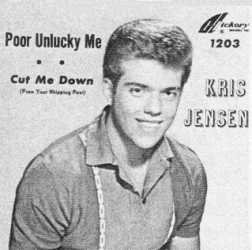
So I put “Kris Jensen” into Google to see what would come up. Along with me and a bunch of other folks, I came across references to the Kris Jensen who did the song Torture back in the sixties. That brought back memories; I remember being stoked (that’s probably what I would have said, being a fringey surfer-chick) that someone with my name had a hit single. If you want to hear the song (it was actually pretty dreary), check out Summer of the 60’s and scroll down almost to the bottom of the jukebox. Also check out the surreal beach scene graphic at the top of the page. Poor ol’ Kris…he was truly a one-hit wonder; the only references to him come up in collections of oldies and an occasional trivia question.

Sample lyrics:

You know that I’m crazy ’bout ‘cha
Yet you make me do without ‘cha
Do you mean to hurt
Or don’t you see?

A picture.

I’m sure you all read about the square dancing tractors…now you can own the video.

04 Nov

Webrings?

Why another web ring? Just found Square and Line Dancing in this Century, a web ring started this September. I don’t quite get it…what’s wrong with the current Square and Round Dance Web Ring…or is there a difference between square dancing combined with line dancing and square dancing combined with round dancing. How about if we just call it Geometric Shapes dancing and cover lines, circles, and squares. (It’s amazing what’s on the web…Geometric Dancing already refers to a form of ballet dancing.)

The 52nd National Square Dance Convention has a website now. But take warning: go to that site and you’ll be blasted by the song Oklahoma, with no way to turn it off except by leaving the page. \<rant\>I wish web sites would give me control over sounds. I’m usually listening to my own music or watching TV while browsing and I don’t want imposed (often bad) midi music.\</rant\>


I suppose it’s a good thing that a site called Mr. Happy Feet, covering all kinds of dancing, actually has a section on square dancing. The fact that it’s totally contentless is another issue. But I must admit that I got into the little dance pictures at the top of the page for each dance form.

03 Nov

Back Again

Well, it’s been a long time…can you say computer game addiction? Actually, that’s not all it’s been, and I haven’t touched Diablo II in over 3 weeks.

I’m teaching a beginners (excuse me, new dancers) class for the Duke City Singles every Friday night. I’m teaching an Advanced class as part of my Advanced workshop series and in conjunction with ACES every Thursday night. I’m on the Board of Directors for the Albuquerque Square Dance Center. So I guess I’ve been keeping busy.

Tonight, I’m not only calling the class, but also calling a dance for Duke City. So I’ve been trying to think of things that would be fun and not too difficult. I’ve come up with a tie-in to the Balloon Fiesta (I know, I know…it was last month, but here in Albuquerque, it’s on our minds all the time). I’m going to teach Squeeze (a simple C1 call), and then we’re going to do a \”Special Shapes\” tip. We can get into hourglasses, galaxies, eggs, sausages, O’s and butterflies. And if I get asymmetric, there are probably some other shapes we could create.

Musicwise, there are some pretty good songs that were at the top of the charts on November 3. In 1944, there was Judy Garland’s The Trolley Song. Also, for you traditional fans, Smoke on the Water was at the top of the country charts. In 1953, You, You, You was at the top, and in 1962, Do You Love Me hit number one. I have square dance recordings of all of these. There were some others that possibly have square dance records; I haven’t looked them up: Theme from the Dukes of Hazzard (Good Ol’ Boys) (1980) and High Cotton (1989).

There’ve probably been a lot of changes to the web since last I checked; guess I’d better go surfin’…

09 Jul

Baltimore NSDC

I’d never been to the National Square Dance Convention before, and I don’t know whether I’ll go to another (I’ve paid for the 50th in Anaheim, but I haven’t registered yet; in order to sign up for housing, one is supposed to send in all the registration forms for people sharing a room at the same time…hello?!! how do I know who I might want to share a room with a year from now).

Why wouldn’t I go again? Well, as a marketing opportunity, it was the pits. I never called for more than about eight squares max, and I never called MS or Plus to more than one square (well, I wouldn’t have been in the Solo hall at noon either, if I didn’t have to be). As a social opportunity, it can’t compare with the NACC (or whatever replaces it), CALLERLAB, and, of course, the gay convention. As a dance opportunity, again, it can’t compare with the replacement NACC and the gay convention. The format of 10 minute slots in MS and Plus doesn’t allow for any “build”; all the caller can do is call pretty vanilla stuff in an entertaining way. As a research opportunity? That’s probably the best bet…sign up to call one tip for tax write-off purposes and spend the rest of the time listening to other callers.

I have to say that I resented having to pay for a schedule. I bought the program (a total waste, mostly filled with full color photos of the convention organizers) without knowing that I had to in order to get the little program booklets in my registration packet. I also found the schedule confusing to read. Of course, since they do it exactly the same every year, I’m sure it gets easier. But it’d sure be nice to be able to look at, say, 10:00 on Thursday and be able to see all the choices, rather than having to thumb through the whole book trying to see (and remember) everything going on at a particular time. It would also be nice if they’d put the schedule on line. They could even do it in a database format, so one could view it by time, or by caller, or by program…what a novel idea! And one could even plan in advance! What a concept!

While I was at the convention, I had a pretty good time. I did resent going off to call for the one square that had to be dragooned into dancing in the solo hall at noon when I could have been dancing C3A…it was the one time I was tempted to tell the tireless caller organizers to find someone else. I also wondered at the purpose of segregating singles into a special hall, when they didn’t really want to be there. Apparently, it functioned mainly as a place to go to find a partner before heading to the other halls.

It was in retrospect that I began to question the point of going. I probably will go next year, but that will be my last easy opportunity; after that, we’ll go back to the annual confict: the NSDC is usually the week before, and on opposite ends of the country from, the gay convention.

Here’s a link, just for sticking through this whole diatribe thing: Nominations for Quote of the Quarter — 2000 (April, May, June).

08 Jul

I’m Back

I’m back! And I found out that people actually read this and miss it when I’m gone! Wow!

So where did I go? It was all square dance related, so it’s fair game for this weblog (BTW, here’s another meta article on weblogging in general: The Blogging Revolution).

First, I went to the National Advanced and Challenge Convention in Milwaukee. Maybe it was because this was the last one, but this was probably the best one I’ve been to (I think I’ve been to four or five, so it’s not like I’m a long-time attendee or anything). The facility was good for our purposes: convenient to the airport, all the floors in the hotel, good (almost excessive) air conditioning, and no local area distractions (i.e., temptations to do something other than dance). I did get out with a party of folks one night, and happened to stumble into one of Milwaukee’s legendary german restaurants. Little did we know, as we wandered through the streets of downtown Milwaukee, and were rejected by an English restaurant (Grenadier’s) because we didn’t conform to their dress code (we weren’t conforming to square dance dress code either), that we would end up in a place that’s “consistently voted Milwaukeeans’ favorite restaurant,” Karl Ratzsch’s.

I was fortunate enough to be able to dance C3A with Steffen Mauring, the organizer of the biennial iPac European Plus, Advanced, and Challenge convention. Since I just learned the level in one weekend and hadn’t danced it since, I was pretty terrified. However, folks were kind and put up with my lack of floor time. I have to say that it’s fun to be dancing “on the edge” again.

After Milwaukee, I went home for a couple of days and then took off for two weeks in Baltimore for the 49th Annual National Square Dance Convention, the Gay Callers Association callers school, and Crack the Crab, the IAGSDC convention.

More on Baltimore tomorrow.

01 Jun

Preserving Squares

I find it interesting to see what’s going on in the contra/traditional squares world, both because I like the dance form, and because it’s interesting to watch the evolution of another dance form that’s similar to MWSD.

Nancy Mamlin talks about calling squares in a usenet message: Re: Preserving local music & dance history. This post inspired a thread: Thoughts on square dancing (inspired by Preserving Local Music & Dance History) on square dancing and modern contras. There’s a mention of a trend towards complexity and keeping everybody active in contras…an interesting thought.

29 May

Community Dance

Found a very nice website today: Community Dance, dealing with one-night-stand types of dances, from a traditional/contra point of view.

This is what the author, Neal Rhodes, in a thread on usenet, said about its genesis:

A while back I was looking for a resource which I could provide to Boy Scout leaders, Girl Scout leaders, school music teachers, church group leaders, etc. It would be intended to give them a introduction to dance (either contra, square, etc) and would encourage them to try to do a community dance. I was wanting to give them an idea of what it looked like, and sounded like, and felt like. I was trying to avoid the “blank stare of cows looking at a passing train” look whenever I tried to suggest such a thing.

I didn’t see any such resource, so I wrote one, and I would be interested in anyone’s comments.

25 May

What’s in a word?

Whoops…this was supposed to go out on May 23…too late!

Speaking as a former (if one ever does become former) attorney, I found this interesting. And in this brief history of women at the law school, it’s noted that she was admitted to the bar because “words importing the masculine gender only may be extended to females.” You see, the Iowa code limited admission to the bar to white males. Square dance relevance? Well, think of all the times the calling is addressed to just the men…but we know it can be extended to us mere females.

The Brooks and Dunn version of “My Maria” was at the top of the charts in 1996.


Now to today, the 25th…

The discussion on sd-callers has turned to words, first “hosed” and now “thar”. I especially like this site on thars, which, it turns out, is a Himalayan goat-like animal, with long hair. Lars postulates that thar-stars were named because of the gents’ long hairy arm-fur…hmmmm. There’s also the Thar Desert.

In Take Our Word For It, there’s an explanation for “hoedown” (put that hoe down and dance) and “shindig” (lively dancing can result in injuries to vulnerable legs). I’m not sure I want to take their word for it.

On this day in 1971, Three Dog Night’s “Joy to the World” was at the top of the pop charts. In 1980, “Funkytown” by Lipps Inc. was at the top. This makes a great patter record.

22 May

Bowling Alone

Miscellaneous stuff:

Here are some references on MiniDisc (written as I sit playing with MP3s…oh well):

Will MiniDisc Survive?

Xitel MD Port AN1 Review


Judy Obee posted some interesting mail to the sd-callers list today, quoting a review of Bowling Alone, by Robert Putnam from a review in the National Post by Jonathan Kay:

Bowling is the most popular competitive sport in the United States. It
is also a metaphor for the ebbing of America’s collective social life.
While the total number of bowlers in the U.S. increased by 10% between
1980 and 1993, the number of league bowlers decreased by more than 40%
during the same period. And even among league bowlers, social
interaction has become less meaningful.

“…mounted above each lane is a giant television screen… Even on a
full night of league play, team members are no longer in lively
conversation with one another about the day’s events…. Instead, each
stares silently at the screen while awaiting his or her turn. Even
while bowling together, they are watching alone.”

But this isn’t a book about bowling. The withdrawal Putnam describes
applies to everything Americans do together, including church, club
meetings, card games, volunteering and dinner parties. The author sees
the steady drop in these activities over the past four decades as
evidence of a decrease in American “social capital”, an essential asset,
he argues, that helps lower crime, improve school performance and
stimulate the economy.

What has caused the drop in social capital? Putnam dismisses many of
the obvious suspects. The decline in free time, for instance, is not
implicated – because there hasn’t actually been a decline in free time.
As Putnam demonstrates, the average amount of labour workers perform in
the United States has remained roughly constant since the Second World
War.

Other obvious suspects, such as mobility, urbanization, divorce and
two-career families, also haven’t played a large role. Neither has the
Internet: The wired are statistically indistinguishable from the
non-wired when it comes to civic engagement.

What does affect social capital is a much older technology:
television. Americans watch an average of four hours per day and,
according to Putnam’s math, each of those hours produces a 10% reduction
in civic activism. In surveys, people who report that TV is their
“primary form of entertainment” volunteer less often, spend less time
with friends, give less blood, are less interested in politics and
express more road rage than their demographically matched equivalents
who report that TV is not their primary entertainment activity.

Time, like social capital, is a scarce asset. And the fact Americans
are spending more of it alone says something about the diminishing
economic returns that come from schmoozing.

This was interesting to me, so I went searching for more stuff on this book:

Besides the main site, there’s also The BetterTogether Story Collector, a site “to provide interactive opportunities to celebrate the new and better ways that Americans are connecting, and provide tools that make it easier for them to do so.”

You can read the book jacket and Chapter 1